Reshaping the CRIS role in the context of AI, open infrastructures, open source, and research evaluation
17th International Conference on Current Research Information Systems (CRIS2026)
University of the Azores, Portugal
May 20-22, 2026
About the event
The CRIS2026 Conference is organised by euroCRIS in cooperation with PTCRIS, the Portuguese Current Research Information System, a programme initiated by FCCN, the digital services unit of the Foundation for Science and Technology (FCT), and friendly support of the University of the Azores (UAc).
CRIS2026 is the seventeenth edition in a biennial series of conferences devoted to improving the availability of and access to research information systems across Europe and beyond. The target audience includes managers of research-performing and/or funding institutions, evaluators, librarians, ICT experts, as well as policy makers.
euroCRIS is a non-profit professional association of CRIS experts and custodian of the Common European Research Information Format (CERIF).
🎥 Watch the announcement video of CRIS2026 below:
Organised by



Azores
The Azores, an autonomous region of Portugal, is a stunning archipelago in the mid-Atlantic composed of nine volcanic islands (Santa Maria, S. Miguel, Terceira, Pico, Graciosa, S. Jorge, Faial, Flores, and Corvo), it has around 250 000 inhabitants.
The moisture in the air and ancient volcanoes have differently shaped the landscape of the islands. Green pastures and high mountains, breathtaking lakes and craters, beautiful coastlines and fajãs make each island a unique place to visit and live.
Known for its breathtaking landscapes, rich biodiversity, and sustainable development efforts, the Azores have become an important hub for scientific research and innovation, particularly in fields such as marine sciences, renewable energy, and climate change studies.
Sustainability is a key focus in the Azores, recognized as one of the world’s leading green destinations. The region’s commitment to environmental conservation, combined with its strategic location between Europe and North America, provides a unique setting for CRIS2026.
Ponta Delgada, the largest city and economic center of the archipelago, offers modern infrastructure while maintaining its historical charm. The city’s blend of Portuguese and Azorean culture, alongside its vibrant academic and research community, ensures a dynamic environment for global collaboration.




University of the Azores, São Miguel campus, in Ponta Delgada
The conference will take place at the University of the Azores (UAc). The UAc is a key academic and research institution in Portugal, playing a fundamental role in advancing education and scientific knowledge in the mid-Atlantic. With three campuses located on the islands of São Miguel, Terceira, and Faial, UAc fosters innovation and interdisciplinary collaboration in various fields, including marine sciences, climate change, sustainability, and digital transformation. As the venue for CRIS2026, the University of the Azores (Ponta Delgada campus, San Miguel Island) will provide an inspiring and dynamic setting for discussions on research information management and digital research infrastructure.
For over 40 years, UAc has been a hub for scientific research, actively contributing to regional and international networks. Its strategic location between Europe and North America enhances opportunities for global collaboration, making it an ideal setting for an event of this scope.
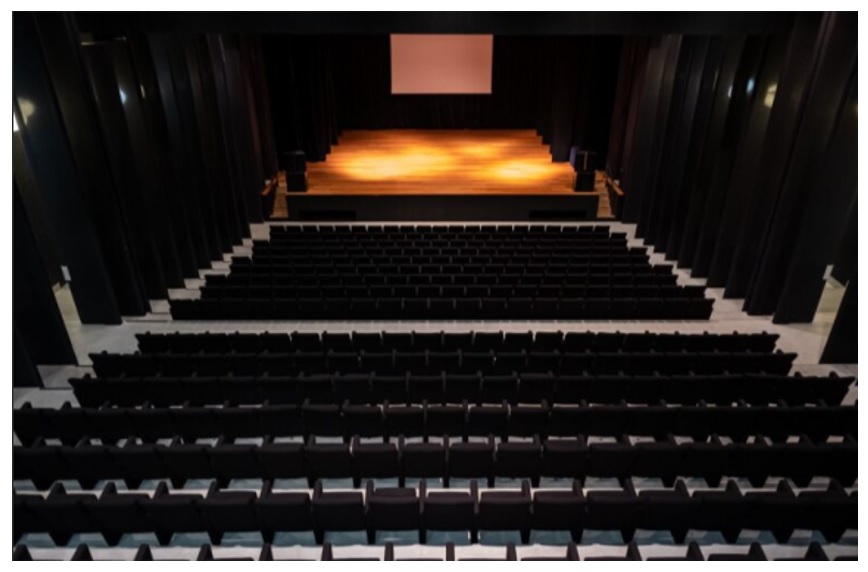
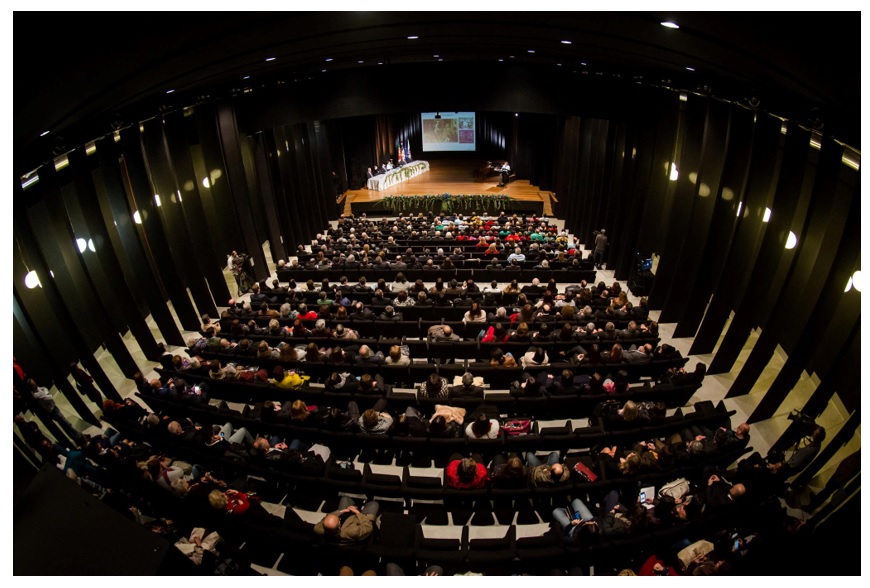
The main sessions of the CRIS2026 conference will be held in the university’s modern auditoriums, which are equipped with state-of-the-art facilities. Additional conference rooms will be available for parallel sessions and workshops.


Getting to Azores
Arriving by Plane
São Miguel Island is served by João Paulo II Airport. There are nine airlines that fly to the Azores. Seven with direct flights. Situated in the middle of the Atlantic Ocean, the destination is two hours from Lisbon (daily flights) and Porto (regular flights) and less than six hours from the USA.
These flights are carried out by the main Portuguese air company TAP Portugal and by the Azorean air company SATA International. There are also low-cost airline companies flying to the Azores. Additionally, in certain times of the year, there are also charter flights from some European cities directly to Ponta Delgada. SATA International also flies regularly to the USA (Boston, Massachusetts) and to Canada (Toronto). There are also daily flights between the islands. Furthermore, from May to October, you can travel between them by boat.
Start your CRIS2026 experience — check flights to the Azores here.
✈️ Direct flights are available from the following countries:
- Portugal
- Belgium
- Canada
- France
- Germany
- Netherlands
- Spain
- Switzerland
- United Kingdom
- USA
Getting Around the Island
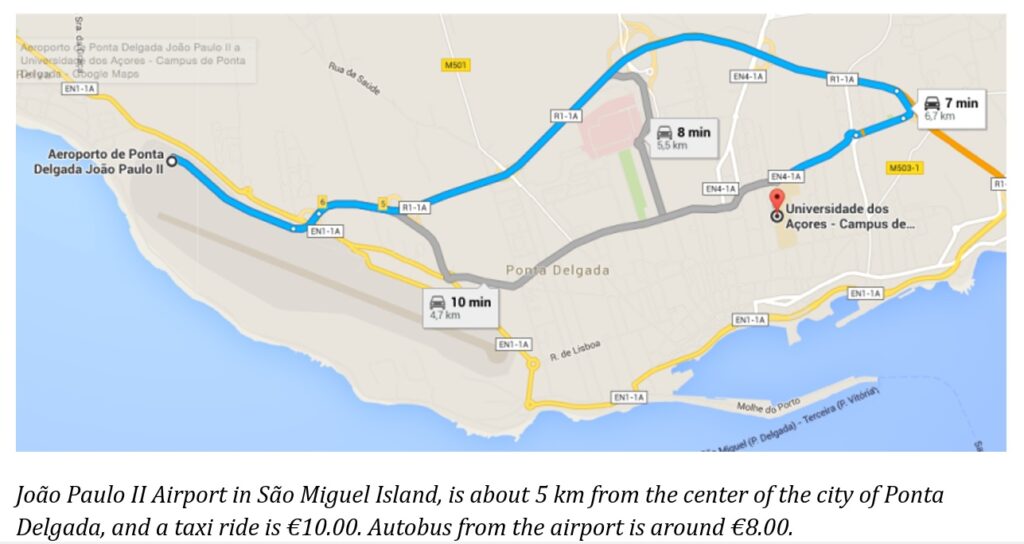
The Azores transport system operates buses and taxis throughout the region, making it easy to explore Ponta Delgada and its surroundings. The Airport is located less than 3 km from the city centre of Ponta Delgada. You’ll be at your destination in no time.
By taxi
The taxi stand at Ponta Delgada Airport is located in the arrivals area. All taxis have a fixed price table. A trip between the airport and the city center costs around €8–10. Services with luggage, at night (9 pm to 6 am), and on Saturdays and Sundays may carry a 20% surcharge.
Taxis are also available for advance bookings — check Taxis Link and Taxis Ponta Delgada.
By car
The Ponta Delgada Airport offers a variety of car rental companies. To rent a car, you have to go to the car rental counter in the arrivals hall, or you can book one in advance.
By ride-hailing apps
In Ponta Delgada, ride-hailing services are available through Bolt and Taxi-Link. Please note that Uber does not operate in this area.
- Bolt – Get a ride / download the app
- Taxi‑Link – iOS App Store · Google Play
Visa Requirements
The Azores are an autonomous region of Portugal and are fully within the European Union and the Schengen Area. As such, visa and entry rules for the Azores are the same as for mainland Portugal and the broader Schengen Area.
EU/EEA/Swiss citizens may enter the Azores with a valid national ID card or passport, no visa is required.
Citizens of other countries that benefit from Schengen visa exemption can also enter the Azores visa-free for short stays (up to 90 days within a 180-day period), provided their passport is valid for at least three months beyond the intended departure date.
Travelers from countries that require a Schengen visa must apply for one through a Portuguese embassy or consulate before traveling.
For more information, please see Visas and Entry (Non-European) and Information for EU/EEA/Swiss Citizens.
Accommodation & Booking
Here are some hotel suggestions in Ponta Delgada within walking distance of the venue.
★★
Room & Go by Lince (450m from the venue; 6-minute walk)
★★★
Hotel Canadiano (750m from the venue; 11-minute walk)
Residencial Sete Cidades (800m from the venue; 11-minute walk)
Neat Hotel (1km from the venue; 15-minute walk)
Hotel Comfort Inn Ponta Delgada (1.1km from the venue; 16-minute walk)
★★★★
VIP Executive Azores Hotel (950m from the venue; 13-minute walk)
Hotel Marina Atlântico (1.1km from the venue; 16-minute walk)
The Lince Azores Great Hotel (1.1km from the venue; 17-minute walk)
São Miguel Park Hotel (1.4km from the venue; 20-minute walk)
Call for Proposals
The general theme of the conference is Reshaping the CRIS role in the context of new trends like AI, Open Source and research evaluation. Other topics of the conference include the following:
- The use of Artificial Intelligence (AI) in research information management
- Semantic approaches, data mining, and profiling in the interpretation of research information
- The use and implementation of standards in CRIS: identifiers, formats, semantics, vocabularies
- CRIS in the ecosystem of open infrastructures
- The development of open-source solutions for research information management
- The impact and the application of the Barcelona Declaration on Open Research Information
- Sustainability and governance of CRIS
- The significance of CRIS for the promotion and realisation of FAIR and Open Science
- Use cases in the application of CERIF
- Output and performance: trends in research assessment, rankings, and benchmarking
- The role of CRIS in support of the responsible use of research metrics: analytics and quantitative measurement in research information systems
- The (worldwide) uptake of CRIS Systems by various stakeholders
We invite the CRIS community and all other interested parties to submit their findings and experiences as contributions of different kinds. This includes full or short research papers, review papers and articles describing case studies, experiences or proposals of novel pieces of technology, processes or models.
Conference contributions will be organized in three tracks:
This track welcomes contributions showcasing best practices, technologies, and case studies on the use of AI within CRIS infrastructures at institutional, national, or international levels. Topics may include AI-driven data quality enhancement, intelligent metadata enrichment, advanced analytics for decision support, workflow automation, and the ethical and responsible use of AI in research information management.
This track invites papers and case studies on the adoption, co-development, and governance of open-source CRIS solutions, especially in the context of the Barcelona Declaration on Open Research Information. Emphasis will be placed on sustainability models, community collaboration, interoperability, and customization of open infrastructures to meet diverse institutional and national needs. Contributions that highlight cross-institutional partnerships or innovative implementation strategies are especially encouraged.
This track focuses on emerging trends in research assessment and their implications for CRIS design and functionality. Relevant topics include improving the quality, accessibility, and interoperability of research information through enhanced data models, processes, and user interfaces, as well as the integration of new indicators, responsible metrics, and cloud-based technologies to support evolving evaluation practices.
Submissions that do not fit neatly into these categories but align with the overall theme and scope of the conference will be considered under a general track./
To present a paper at the conference, the first step is to send in a 2-5 page extended abstract for the contribution. Based on these abstracts, the Programme Committee will assess the suitability of the papers for the event.
Please submit your extended abstract to the following easyChair account: https://easychair.org/my2/conference?conf=cris2026
Guidelines for writing extended abstracts
An extended abstract is not simply a long abstract. An extended abstract should contain some references, comparisons to related previous work, cases, descriptions and findings and other details expected in a full paper but not in an abstract. The typical length of the extended abstract is 2-5 pages. The abstract should be readable and understandable, and it is key to highlight the main contributions that make the work presented useful to the audience of CRIS researchers and/or practitioners.
The program committee will consider among other these aspects in reviewing the extended abstract:
- Are there any major technical flaws in the abstract?
- Is the language appropriate for a scholarly or technical audience?
- Is the work a significant advance over previous work/cases/experiences in the area, by the same authors or others?
- Does the extended abstract offer an interesting perspective on a problem or describe experiences that might be useful to others?
- Is the abstract well presented and understandable?
The timeline for submitting and selecting contributions is:
- February 7, 2026 – Extended abstract submission
- March 15, 2026 – Acceptance/Rejection Announcement
- May 1, 2026 – Full paper camera-ready submission
As it was the case for previous CRIS Conferences, the extended abstracts for all accepted papers will be published in the euroCRIS repository shortly before the conference.
On top of this, a selection of papers will be published as post-proceedings with an international publisher indexed in the Web of Science (WoS) and Scopus.
The CRIS2026 Conference also welcomes proposals for posters, tutorials and workshops related to any of the topics for the conference. System providers are also invited to submit their contributions for a specific Exhibitions and Business Session. More details on the calls for these separate activities are given below.
Call for posters
Posters on the conference themes above may be submitted as regular contributions via easyChair. When adding the info on the authors and title and abstract for the poster, please specify that this is a poster contribution. The same submission deadlines specified above for conference papers also apply to poster submissions.
Authors of submissions not deemed to be sufficiently solid for a conference paper and/or presentation during the peer-review process may also be invited to submit their contribution as a poster instead.
Call for tutorials
Tutorials are expected to be sessions of a duration ranging from 1 to 3 hours in which the instructor exposes a topic or presents the use of a system. Tutorial proposals need to include:
- Title
- Instructors and their qualifications
- Topics to be covered
- Prerequisites for attendants
- Tutorial setting required (need for computers, Internet connection, other materials)
Tutorials are expected to serve the audience in improving or acquiring knowledge or skills or demonstrating and gaining hands-on or practical experience with technologies and tools.
Proposals for tutorials should be sent to eurocris@eurocris.org before Feb 15th, 2024.
Call for panels
Panels are expected to be sessions organised during the main conference activities. They should be focused on a specific topic. Panel proposals need to include:
- Title
- Panel chair(s)
- Panel members
- Topic to be covered
- Justification of the importance of the topic
Panels will be included in the conference programme. Contributions to panels will typically not be published in the CRIS2026 Conference proceedings.
Call for workshops
Workshops are expected to be sessions organised the day before or in parallel to main conference activities. They should be focused on a specific topic. Workshops proposals need to include:
- Title
- Workshop chair(s)
- Technical/scientific committee members
- Topics to be covered
- Justification of the importance of the topics
Workshops will be included in the conference programme, but the peer-review process and selection of papers is the responsibility of their promoters. Contributions to workshops will typically not be published in the CRIS2024 Conference proceedings unless they’re held within the event programme.
Proposals for panels and workshops should be sent to eurocris@eurocris.org before Feb 7th, 2026.
Call for Exhibition and Business Session
Events held by euroCRIS typically include a business session where CRIS vendors are invited to present recent developments in their products. In the case of the CRIS2024 Conference in Vienna, this session was scheduled via a plenary “Tools and products” slot. The objective is to try and merge ‘commercial’ presentations with the general themes for the conference.
Proposals for contributions to the CRIS2026 business session should subsequently be submitted following the same guidelines that apply to general submissions. These proposals may be tagged as business session-oriented by the submitter, but it will be the CRIS2026 Programme Committee that will eventually allocate them to this session.
As for the exhibition opportunities, CRIS2026 conference sponsors will be offered a space to provide in-person information on their products and services. Please reach out to eurocris@eurocris.org to arrange the sponsorship and to receive more information on the way the exhibition tables will be managed at the conference.
The general theme of the conference is Reshaping the CRIS role in the context of new trends like AI, Open Source and research evaluation. Other topics of the conference include the following:
- The use of Artificial Intelligence (AI) in research information management
- Semantic approaches, data mining, and profiling in the interpretation of research information
- The use and implementation of standards in CRIS: identifiers, formats, semantics, vocabularies
- CRIS in the ecosystem of open infrastructures
- The development of open-source solutions for research information management
- The impact and the application of the Barcelona Declaration on Open Research Information
- Sustainability and governance of CRIS
- The significance of CRIS for the promotion and realisation of FAIR and Open Science
- Use cases in the application of CERIF
- Output and performance: trends in research assessment, rankings, and benchmarking
- The role of CRIS in support of the responsible use of research metrics: analytics and quantitative measurement in research information systems
- The (worldwide) uptake of CRIS Systems by various stakeholders
We invite the CRIS community and all other interested parties to submit their findings and experiences as contributions of different kinds. This includes full or short research papers, review papers and articles describing case studies, experiences or proposals of novel pieces of technology, processes or models.
Conference contributions will be organized in three tracks:
This track welcomes contributions showcasing best practices, technologies, and case studies on the use of AI within CRIS infrastructures at institutional, national, or international levels. Topics may include AI-driven data quality enhancement, intelligent metadata enrichment, advanced analytics for decision support, workflow automation, and the ethical and responsible use of AI in research information management.
This track invites papers and case studies on the adoption, co-development, and governance of open-source CRIS solutions, especially in the context of the Barcelona Declaration on Open Research Information. Emphasis will be placed on sustainability models, community collaboration, interoperability, and customization of open infrastructures to meet diverse institutional and national needs. Contributions that highlight cross-institutional partnerships or innovative implementation strategies are especially encouraged.
This track focuses on emerging trends in research assessment and their implications for CRIS design and functionality. Relevant topics include improving the quality, accessibility, and interoperability of research information through enhanced data models, processes, and user interfaces, as well as the integration of new indicators, responsible metrics, and cloud-based technologies to support evolving evaluation practices.
Submissions that do not fit neatly into these categories but align with the overall theme and scope of the conference will be considered under a general track./
To present a paper at the conference, the first step is to send in a 2-5 page extended abstract for the contribution. Based on these abstracts, the Programme Committee will assess the suitability of the papers for the event.
Please submit your extended abstract to the following easyChair account: https://easychair.org/my2/conference?conf=cris2026
Guidelines for writing extended abstracts
An extended abstract is not simply a long abstract. An extended abstract should contain some references, comparisons to related previous work, cases, descriptions and findings and other details expected in a full paper but not in an abstract. The typical length of the extended abstract is 2-5 pages. The abstract should be readable and understandable, and it is key to highlight the main contributions that make the work presented useful to the audience of CRIS researchers and/or practitioners.
The program committee will consider among other these aspects in reviewing the extended abstract:
- Are there any major technical flaws in the abstract?
- Is the language appropriate for a scholarly or technical audience?
- Is the work a significant advance over previous work/cases/experiences in the area, by the same authors or others?
- Does the extended abstract offer an interesting perspective on a problem or describe experiences that might be useful to others?
- Is the abstract well presented and understandable?
The timeline for submitting and selecting contributions is:
- February 7, 2026 – Extended abstract submission
- March 15, 2026 – Acceptance/Rejection Announcement
- May 1, 2026 – Full paper camera-ready submission
As it was the case for previous CRIS Conferences, the extended abstracts for all accepted papers will be published in the euroCRIS repository shortly before the conference.
On top of this, a selection of papers will be published as post-proceedings with an international publisher indexed in the Web of Science (WoS) and Scopus.
The CRIS2026 Conference also welcomes proposals for posters, tutorials and workshops related to any of the topics for the conference. System providers are also invited to submit their contributions for a specific Exhibitions and Business Session. More details on the calls for these separate activities are given below.
Call for posters
Posters on the conference themes above may be submitted as regular contributions via easyChair. When adding the info on the authors and title and abstract for the poster, please specify that this is a poster contribution. The same submission deadlines specified above for conference papers also apply to poster submissions.
Authors of submissions not deemed to be sufficiently solid for a conference paper and/or presentation during the peer-review process may also be invited to submit their contribution as a poster instead.
Call for tutorials
Tutorials are expected to be sessions of a duration ranging from 1 to 3 hours in which the instructor exposes a topic or presents the use of a system. Tutorial proposals need to include:
- Title
- Instructors and their qualifications
- Topics to be covered
- Prerequisites for attendants
- Tutorial setting required (need for computers, Internet connection, other materials)
Tutorials are expected to serve the audience in improving or acquiring knowledge or skills or demonstrating and gaining hands-on or practical experience with technologies and tools.
Proposals for tutorials should be sent to eurocris@eurocris.org before Feb 15th, 2024.
Call for panels
Panels are expected to be sessions organised during the main conference activities. They should be focused on a specific topic. Panel proposals need to include:
- Title
- Panel chair(s)
- Panel members
- Topic to be covered
- Justification of the importance of the topic
Panels will be included in the conference programme. Contributions to panels will typically not be published in the CRIS2026 Conference proceedings.
Call for workshops
Workshops are expected to be sessions organised the day before or in parallel to main conference activities. They should be focused on a specific topic. Workshops proposals need to include:
- Title
- Workshop chair(s)
- Technical/scientific committee members
- Topics to be covered
- Justification of the importance of the topics
Workshops will be included in the conference programme, but the peer-review process and selection of papers is the responsibility of their promoters. Contributions to workshops will typically not be published in the CRIS2024 Conference proceedings unless they’re held within the event programme.
Proposals for panels and workshops should be sent to eurocris@eurocris.org before Feb 7th, 2026.
Call for Exhibition and Business Session
Events held by euroCRIS typically include a business session where CRIS vendors are invited to present recent developments in their products. In the case of the CRIS2024 Conference in Vienna, this session was scheduled via a plenary “Tools and products” slot. The objective is to try and merge ‘commercial’ presentations with the general themes for the conference.
Proposals for contributions to the CRIS2026 business session should subsequently be submitted following the same guidelines that apply to general submissions. These proposals may be tagged as business session-oriented by the submitter, but it will be the CRIS2026 Programme Committee that will eventually allocate them to this session.
As for the exhibition opportunities, CRIS2026 conference sponsors will be offered a space to provide in-person information on their products and services. Please reach out to eurocris@eurocris.org to arrange the sponsorship and to receive more information on the way the exhibition tables will be managed at the conference.
Programme (under construction)
Official start of the event. Programme will be added as sessions start to be configured once the CfP deadline is reached.
Official start of the event. Programme will be added as sessions start to be configured once the CfP deadline is reached.
Registration
Registration will open in Mar 2026. Please note that the CRIS2026 Conference will have a limit of 200 attendees.
Registration information
Registration for the CRIS2026 Conference is conducted on an external Eventbrite webpage that will be linked from this event website.
Group registrations for three or more attendees from the same organisation will be processed since mid-January 2026, as they do not require the use of the external registration page but can directly be processed by emailing eurocris [at] eurocris.org with subject “CRIS2026 group registration”.